

Maintaining joint health is a major necessity of a sustainable fitness routine. Many gym enthusiasts focus heavily on muscle growth and fat loss. However, neglecting the connective tissues can lead to unwanted training breaks. The elbow joint frequently experiences a certain intensity of strain during upper-body workouts.
Both pressing and pulling movements require the elbow to function as a main force transmitter. This repetitive loading can cause wear and tear on the surrounding tendons as time passes.
Using protective support gear has become a popular method for managing joint stress. Orthopedic aids, like elbow support for gym sessions, are widely available to lifters of all levels.
This blog explains how these supportive aids assist in injury prevention. It will also highlight how to integrate them safely into your workouts.
The Mechanics of Gym Elbow Injuries
Understanding how injuries happen helps you prevent them effectively. Most gym-related elbow issues develop gradually rather than suddenly. They are usually classified as overuse injuries. Your muscles experience microscopic tears when you lift weights. This is a normal part of the strength-building process. Your tendons also experience strain during this time.
Muscles have a large blood supply and heal relatively quickly. Tendons have a much more limited blood supply. This is why tendons adapt and recover at a slower rate than muscle tissue. The tendons cannot keep up if you increase your workout weight and volume too quickly. This imbalance leads to micro-tears in the connective tissue. These tiny tears cause localized irritation and discomfort as time passes.
Identifying Elbow Vulnerabilities
Different exercise tracking paths apply strain to different areas of the arm. Recognizing these zones enables you to implement targeted prevention strategies.
The Outside Elbow
The tendons on the outer side of your forearm attach to a bony bump. Repetitive gripping forces can strain this attachment point. This irritation is known as lateral epicondylitis. Using a tennis elbow support band helps reduce the pull on this specific bone area.
The Inside Elbow
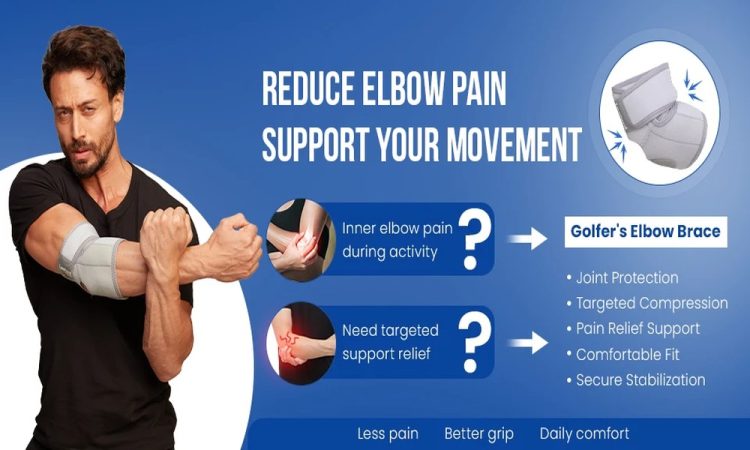
The inner tendons control the closing of your hand and the flexing of your wrist. Heavy bicep curls and chin-ups strain these tissues. This area is prone to medial epicondylitis. Full sleeve compression is useful for protecting this inner zone.
The Posterior Elbow
The back of your elbow houses the triceps tendon and a small fluid cushion. Heavy locking movements like overhead extensions stress this posterior structure.
How an Elbow Support Helps Prevent Injury?
Support gear protects your joints through several subtle mechanical and physiological changes. They act as an extra layer of defence during strenuous workouts.
Thermal Regulation
Neoprene material traps your body heat. This continuous warmth keeps the joint fluid thin and moving smoothly. Thick joint fluid can cause a grinding sensation during movement.
Load Distribution
A snug elbow support distributes mechanical forces across the entire elbow. This reduces the peak strain that lands directly on a single tendon insertion point.
Vibration Reduction
Lifting heavy weights creates minor vibrations through your bones and muscles. Compression from the elbow support dampens these vibrations. This reduces muscle fatigue as a result.
Form Enforcement
The compression from the elbow support functions as a tactile reminder. It helps you feel when your arm is drifting out of alignment during a lift.
Tissue Boundary
It keeps your muscles tightly contained. This prevents excess lateral movement of the tendons during high-repetition sets.
Matching Elbow Supports to Gym Exercises
Different exercises alter the loading pattern on your joints. Your choice of support should align with your daily workout selection.
| Exercise Category | Joint Stress Type | Best Support Choice | Prevention Goal |
|---|---|---|---|
| Heavy Pressing | Axial compression | Neoprene Sleeve | Prevent joint flaring |
| High-Volume Pulling | Repetitive gripping | Counterforce Strap | Reduce forearm tendon tug |
| Overhead Extension | Extreme joint flexion | Neoprene Sleeve | Protect triceps tendon |
| Bodyweight Dips | Unstable loading | Neoprene Sleeve | Maintain tracking alignment |
Alternatives to Prevent Elbow Injuries in the Gym
- Do not just jump into intense gym exercises in a single go. Start by doing warm up sets first.
- Confirm if your form is good. Ask yourself these questions. Are my elbows tucked? Are my wrists aligned? Are my shoulders engaged?
- Make sure not to lift too much too fast, and without any breaks at that. Simply go step by step with ease.
Final Takeaways
An elbow support for gym workouts is an effective measure to safeguard your joints against injury and overuse issues. This orthopedic aid functions by increasing local blood circulation and improving form awareness. It distributes mechanical loads evenly. This helps to prevent stiffness and the pain that comes with it. It activates the mind’s ability to be aware of all elbow movements.
Want to know other alternatives to prevent elbow injuries in the gym?
- Make sure to always warm up
- Maintain safe form throughout gym sessions
- Wear your elbow support during workouts
You can actually ensure your joints remain healthy for years to come. This is achievable just by treating an elbow support as a partner to your gym routine. Again, note that the best measure to prevent injury with an elbow support is to use it correctly.


